Great Cumbrae Island, Craigengour
Organisation
The Royal Commission on the Ancient and Historical Monuments of Scotland
Canmore ID40618
Site TypeSTANDING STONE
CountyBUTESHIRE
ParishCUMBRAE
CouncilNORTH AYRSHIRE
NGRNS 1761 5641
Latitude, Longitude55.766547N, 4.908866W
Images
Archaeological Notes
NS15NE 15 1761 5641.
(NS 1761 5641) Standing Stone (NR)
OS 25" map (1896)
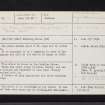
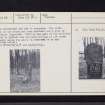
The stone stands about 6ft high and 14 inches broad. It is supposed to be a memorial to some of the Norwegians who fell at the Battle of Largs in 1263.
Name Book 1855
This stone is known as the Gouklan Stone. There are eight large boulders nearby, and two other pillars are reported to have been closely associated with it. A circle of pits dug around the stone revealed nothing.
W Lytteil 1886; J K Hewison 1893
The stone is as described in the Ordnance Survey Name Book (ONB). It was pulled down some years ago by vandals but has since been re-erected and set in concrete. The north face of the stone has been smoothed and a list of initials inscribed. Nothing was seen of the boulders noted by Lytteil and the name Gouklan is not known locally where the stone is referred to as the 'Druids stone'.
Visited by OS (JTT) 6 November 1964
NS15NE 15 1761 5641.
(NS 1761 5641) Standing Stone (NR)
OS 25" map (1896)
The stone stands about 6ft high and 14 inches broad. It is supposed to be a memorial to some of the Norwegians who fell at the Battle of Largs in 1263.
Name Book 1855
This stone is known as the Gouklan Stone. There are eight large boulders nearby, and two other pillars are reported to have been closely associated with it. A circle of pits dug around the stone revealed nothing.
W Lytteil 1886; J K Hewison 1893
The stone is as described in the Ordnance Survey Name Book (ONB). It was pulled down some years ago by vandals but has since been re-erected and set in concrete. The north face of the stone has been smoothed and a list of initials inscribed. Nothing was seen of the boulders noted by Lytteil and the name Gouklan is not known locally where the stone is referred to as the 'Druids stone'.
Visited by OS (JTT) 6 November 1964